
Living with cognitive dissonance
Or maintaining an outwardly calm demeanour in a world that is unravelling but doesn't know it

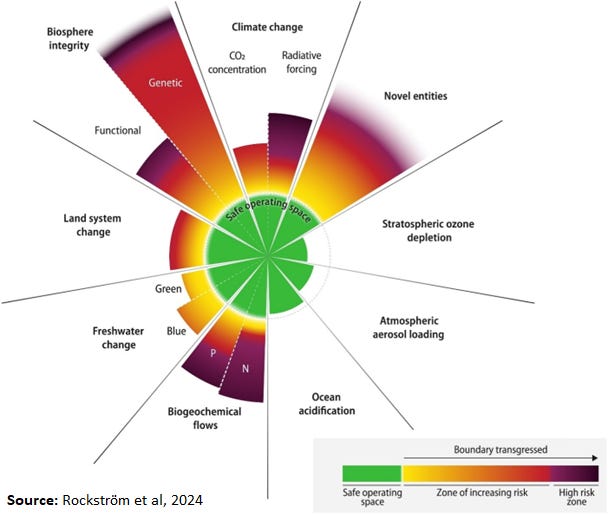
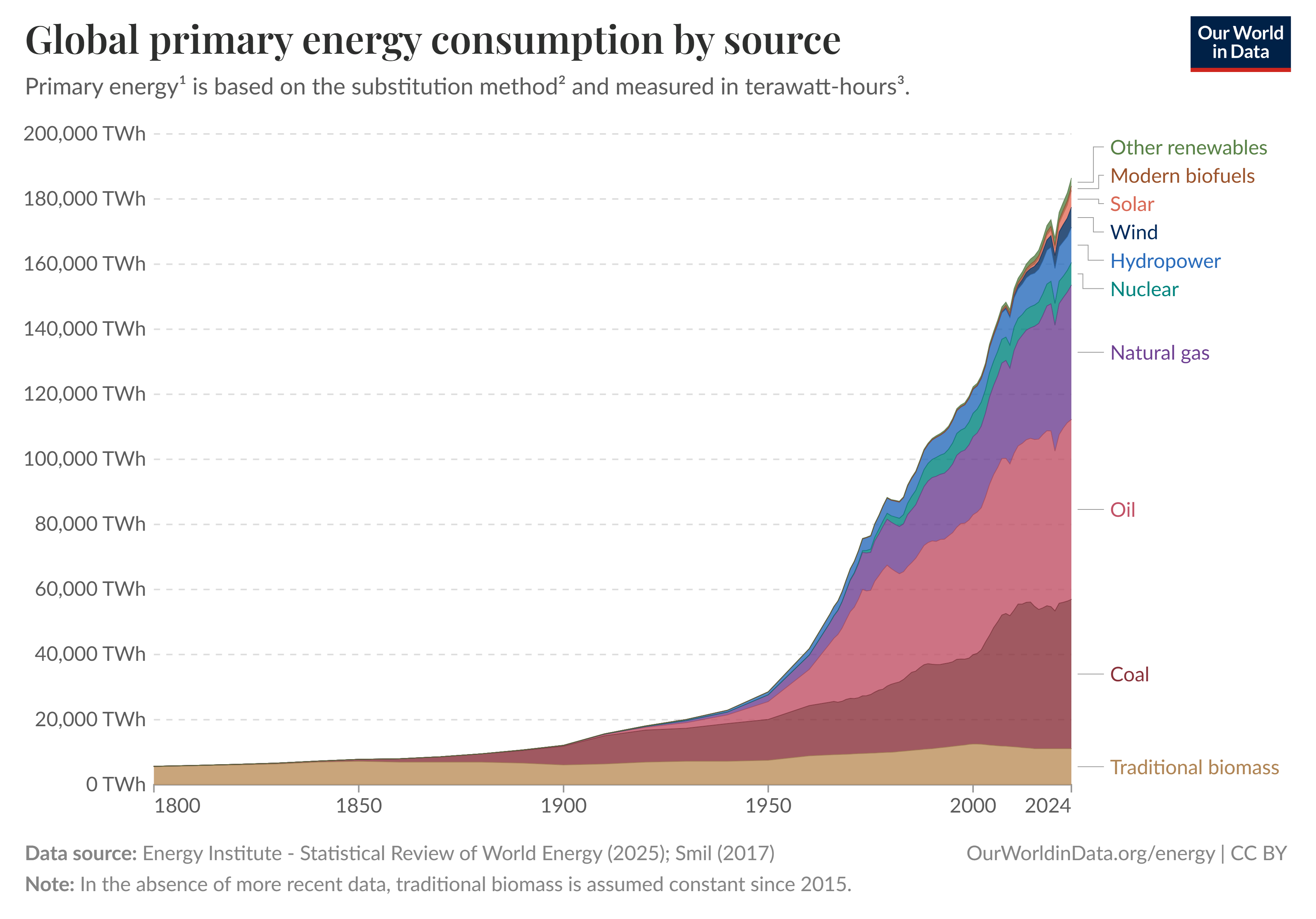
Everyday I contend with an inward struggle. On the inside is my awareness of the scale and complexity of the planetary predicament (once you know it, you can’t unknow it), while in ‘the real world’, BAU (business as usual) continues. In my work, I am constantly self-censoring, knowing that any talk of the myth of growth decoupled from environmental harm, or of the much-vaunted (but not happening) energy transition, energy decent, collapse, or post-growth economics would be counterproductive. This would be seen as incendiary and unwelcome as a Molotov cocktail thrown into the midst of a dinner party – given that we are now operating in a political environment in which uttering the once normalised words “wellbeing”, “equity” or “climate action” gets you branded as woke and hopelessly idealistic.
Instead, I do what little I can to shape existing initiatives and policies around the periphery. Where I can, I also work on bigger picture, system-wide policy work with long term public good as a central goal, including this paper on how to achieve system change in the transport system. ‘Failure demand’ has a been a central concept in this work (and I will come back to this again in a later post).
Politicians at all levels of government are now openly hostile to anything that is not about short-term value for money and ‘efficiency’, so this is lead balloon material, but as I keep reminding myself (and occasionally others), while we have seen a violent ideological shift towards libertarianism in the last couple of years (reduction of the role of government, and prioritisation of individual and private property rights above social good), the reality of the world in which we operate has not changed. That reality – of an unravelling economic and social system (eg, cost of living crisis, public health crisis, escalation in poverty and homelessness, insurance retreat, infrastructure deficit…) in the face of a multiplicity of dangerous trajectories – is still going to be there (just a bit worse) when this assault on society and the common good has passed. We will still need these solutions, and much more.
I know many others deal with this cognitive dissonance. I know people who literally have internal arguments between the more optimistic side of themselves and the more pessimistic sides of themselves every day. This may sound a bit funny, but I can only imagine how destabilising it is.
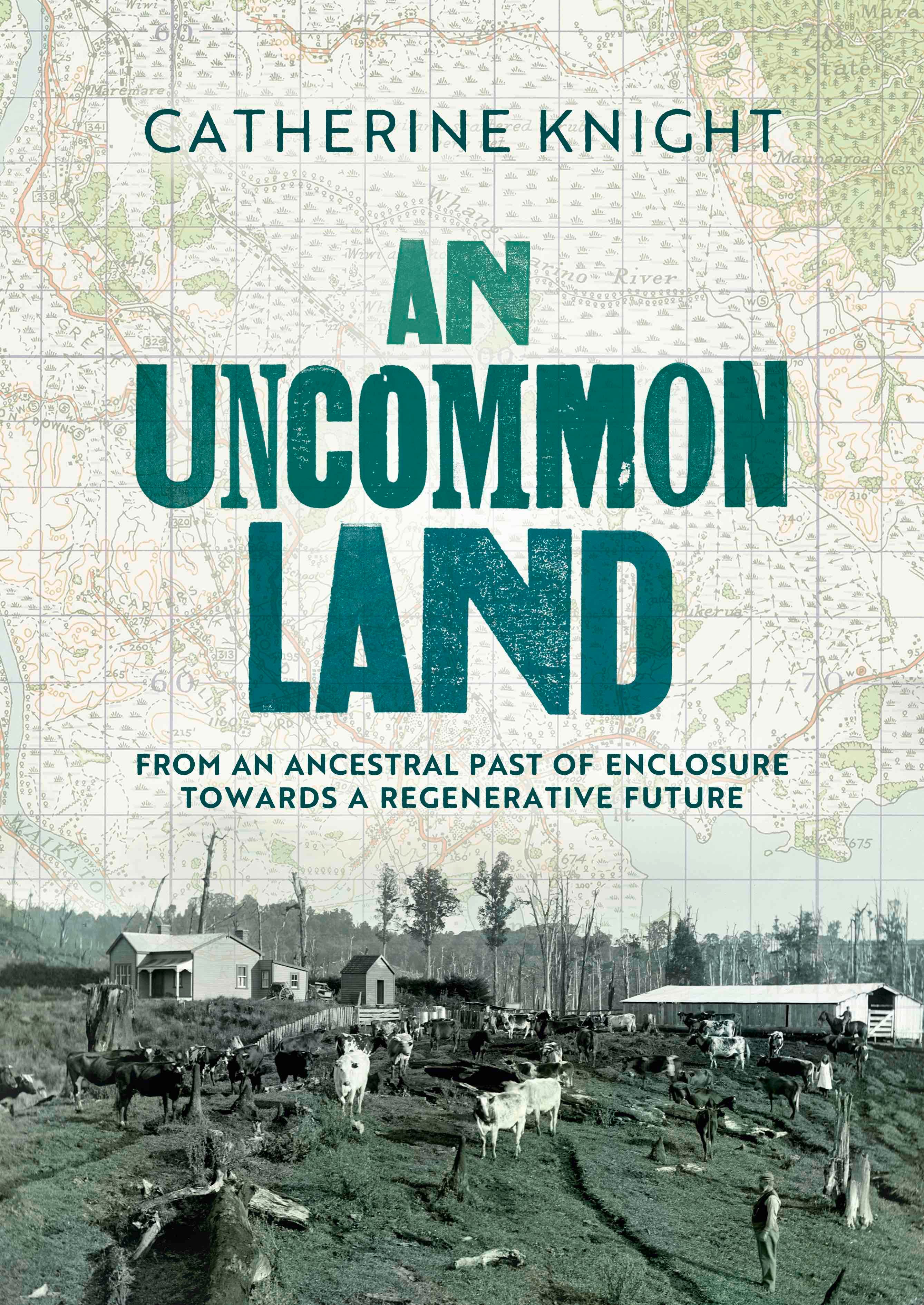
I have been travelling around the country talking about my latest book, ‘An Uncommon Land’. And after I speak, I am often asked, in your view, what needs to happen? This is a huge question, one that could be answered in many different ways (and I don’t obviously have all the answers). But one thing that I do say, is that we need to raise awareness of the planetary predicament, of the dangerous but all-pervasive myths (eg that we can decouple exponential economic growth from emissions and other environmental harms), and of the false solutions.
This does not have to be done on a grand stage, but rather through person-to-person conversations – among family, friends, colleagues, perhaps someone sitting next to you on the bus, noticing you are reading ‘Less is More’ (see below). Then before long we will reach a tipping point of those who ‘get it’ and can help build a consensus around the reality that we cannot ‘fix’ this with a slightly different version of the current system. Only when there is a broader, deeper understanding of the reality we face, can we have a real conversation about the future.
Great places to start (if you haven’t already):
The Great Simplification - especially, for newbies to Nate Hagen’s work, these resources.
Jason Hickel’s “Less is More”
Net energy timebomb – a really short but helpful explainer video of net energy
These are just some resources I found useful when I was beginning my journey of discovery (my ‘knowing what I can’t unknow’). Everyone has had their own windows into this disturbing yet empowering world of the planetary predicament. Please add your own in the comments.
Thank you Catherine for this beautiful description of the cognitive dissonance of these times. I think your final sentence “only when there is a broader, deeper understanding of the reality we face, can we have a real conversation about the future” is so true. And I think part of that involves developing the embodied cognitive architecture to hold the discomfort of complexity, rather than the reductive approaches we’ve been acculturated to want. I think that in some ways, learning to be with the cognitive dissonance is good practice for developing the capacities we need. To hold several things at once, to be open to transcontextuality, to imagine feedback loops, to handle divergence. All of these need cognitive elasticity to hold the messiness, and that can be so uncomfortable when we’ve been taught to expect simple linear tidy answers. I think this too is part of understanding the reality we face—that we’ve been using inadequate mental models for our living world.
Thanks for you're honesty here. It's of great value to outsiders like me.
I think turning on the government faucet is the best shot for generating a mass social tipping point.
Some potential hope on this point, which I fully agree with you on:
"Then before long we will reach a tipping point of those who ‘get it’ and can help build a consensus around the reality that we cannot ‘fix’ this with a slightly different version of the current system."
Having gone back and read what labour was saying after WW1, it became quite clear that nationalization of the economy during wartime had the immense effect of raising consciousness to what was possible. Here is one example from Mattei:
"The war had revealed to all—workers and bureaucrats alike—that economic priorities were actually political priorities, and thanks to unorthodox finance, the state could meet political objectives at any financial cost. Indeed, once the gold standard constraint was removed, the possibilities that emerged opened new horizons for social expenditure. Suddenly no expenditure—toward social measures that were within the society’s resource capabilities—seemed beyond financial possibility (Mattei, 2022)."
Similar expressions were remarked on in America at the same time. Though of course, our benevolent overlords managed to erase phrases like "industrial slavery", "wage slavery", and "soulless corporation" from history around that time.
I am a libertarian socialist. But if we can get to this point where public money is used, things could turn around quite rapidly, if only to avoid the worst of what's coming.
The student climate resistance is where I think most of the leadership in our society can be found. People must support them.