
Deconstructing Nicola: How public finance myths and moral language shape us
Guest post by Searchlight


A guest post by Searchlight
In the same week New Zealand recorded its highest level of homelessness in modern history, the Minister of Finance stood in Parliament and delivered a Budget speech built on the language of discipline, restraint and fiscal virtue.
The contrast was striking. While families queued at foodbanks, youth unemployment surged in the poorest rural communities, and young people continued to leave in droves, the Government’s central narrative was one of belt tightening, bending debt curves and returning the books to surplus.
This contrast is not simply political theatre. It reflects a set of public‑finance myths so deeply embedded in New Zealand’s political culture that they feel like common sense. These myths shrink political imagination, justify underinvestment and turn economic management into a moral test. Nicola Willis’s 2026 Budget speech is a case study in how these myths are reproduced through metaphor, framing and narrative structure.
The speech opens with a familiar litany of global shocks and domestic fragility. Debt is a burden. Interest costs are a weight. An ageing population is a cost that must be shouldered. The state is described as a household that must tighten its belt, avoid temptation and resist “Band-Aids and sugar hits”.
The household analogy feels powerful because it mirrors how our own lives work. If we spend more than we earn, we run out of money. If we max out our credit cards, the interest crushes us. So, when politicians say the Government must “tighten its belt” or “live within its means”, it sounds sensible. But it’s deeply misleading.

A family can’t create money. A currency‑issuing sovereign Government such as New Zealand’s can, and does, every day. A family can go bankrupt. A Government that issues its own dollars cannot run out of them and can always meet its obligations. A family must earn income before it spends. A Government spends first, and tax comes afterwards. (See also “The government is like a household”.)
As Otago doctoral student Morgan Edwards writes on his New Economic Management Substack, recognising that the Reserve Bank can always meet the Government’s liabilities “has the potential to fundamentally change New Zealand’s political economy”.
This doesn’t mean the Government can spend with impunity. It means the limits the Government should worry about are not financial, but the productive capacity of the real economy: workers, skills, materials, land, infrastructure. Can we build more houses? Generate more energy? Train and employ more nurses and teachers? Expand factories? If the real resources exist, the Government can mobilise them or invest to build them. If they don’t, and the Government issues too much currency, that’s where inflation risks arise. And no-one wants that.
Shift the diagnosis from a fiscal deficit to a deficit in the capabilities people need to live decent, flourishing lives, and the entire economic prescription changes. The guiding questions then become: where should we be investing so that our people can flourish, be productive, and contribute? The basics, for a start, such as feeding our children, ensuring they are warmly housed, providing low‑cost electricity, building the productive capabilities of our communities and regions so our children have a future, and lifting our woeful science and innovation budget so we can solve the big problems facing us.
And what needs to be done to secure the natural beauty and bountifulness of our land for our grandchildren? Or, to borrow from Robert F. Kennedy, the beauty of our cultures, the strength of our relationships, the intelligence of public debate and the integrity of public officials? From all these things our innovation and productivity spring and hence the growth this Government says it wants but is doing so much to destroy.
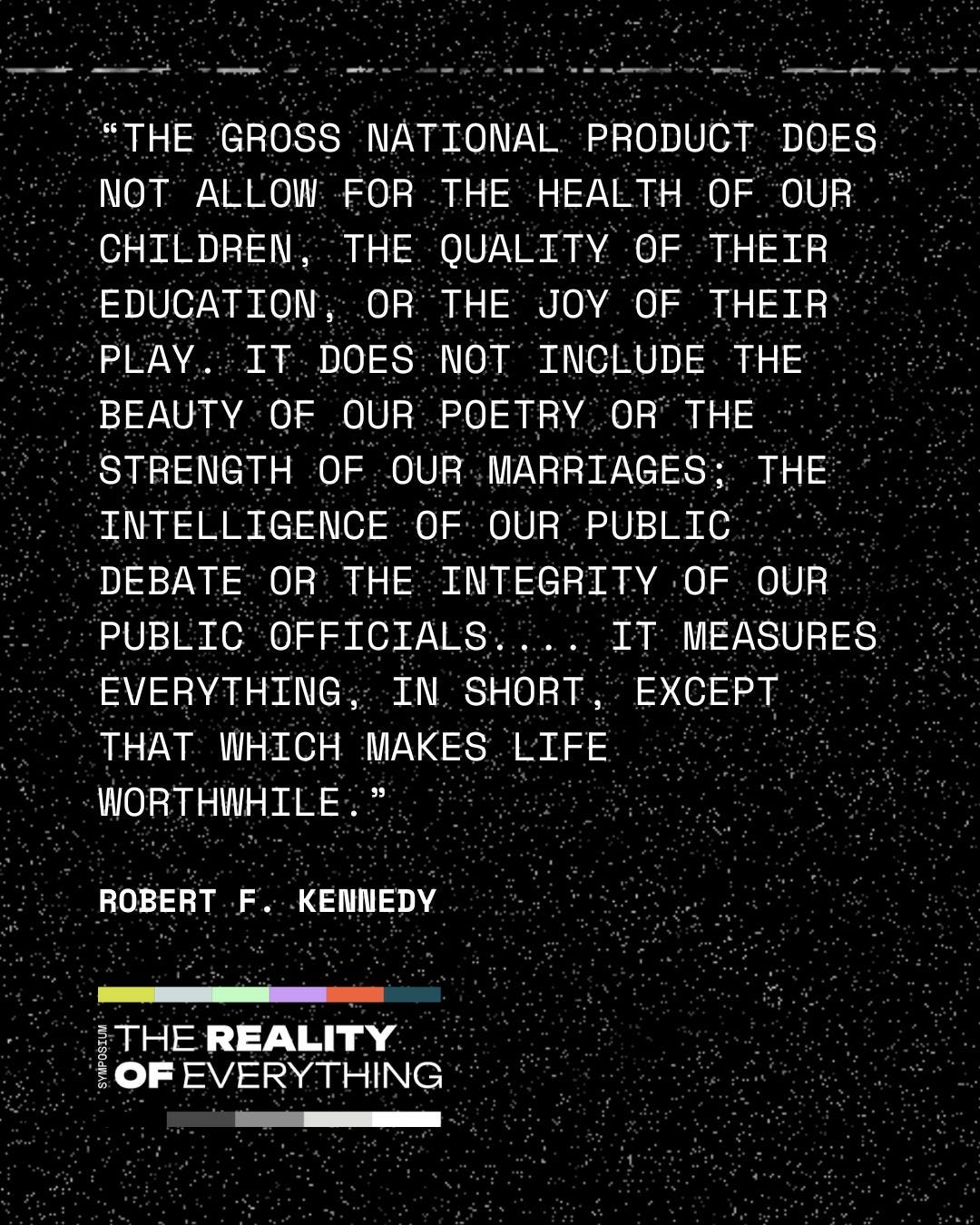
The household metaphor makes investment in teachers, nurses, housing, science, community wealth‑building, the arts and public infrastructure look reckless. It makes cuts look responsible, even when those cuts fall hardest on people already struggling.
Yet the household metaphor dominates Nicola Willis’s speech, narrowing what is politically imaginable. It has become what German political economist Maja Göpel calls an “iron cage”, locking us into outdated systems, institutions, incentives and norms, a cage that inhibits our freedom and denies the increasingly hard lived reality of our people.
Once the household metaphor is accepted without challenge and repeated constantly in the media, austerity stops being a choice and starts being a duty, the “adult” thing to do.
The speech reinforces the idea that the government must earn the right to spend by first proving its discipline. Surpluses are framed as redemption. Debt is framed as sin. Spending is temptation. Restraint is virtue. This is not economic analysis. It is moral storytelling. The effect is to turn public investment into a vice and public neglect into a virtue. It becomes politically rational to underfund health, housing and education, even when the social costs of doing so are immense, because the moral reward lies in the appearance of discipline today, not the prosperity of our children tomorrow and into the future.
This moral framing becomes sharpest when the speech turns to people on low incomes. Working families are praised. Sole parents who move into work are celebrated. But beneficiaries are described through the language of dependency, cost and correction. Temporary Additional Support is reduced to a “last resort”, implying that long‑term need is a misuse of the system rather than a reflection of structural failings. The rhetorical tricks are unmistakable: the government is the parent, the public is the child, and the poor are wayward children needing discipline. The wealthy, by contrast, are cast as responsible adults. Deserving even.
Yet the same discipline is not applied to ministers themselves. The speech insists that “Kiwis should have confidence that the Government is spending their money wisely”, even as several ministers have accepted allowances and perks far beyond what ordinary workers could access, ironically, for their housing.
The household metaphor is invoked to discipline the poor, not the powerful. And this is where the political economy becomes unavoidable: many well‑off New Zealanders cheer austerity because, as the Prime Minister himself put it, they are “sorted”. They do not rely on the services being cut. They do not feel the consequences. Austerity is painless for those insulated by wealth and devastating for those who are not. When you are sorted, it is easy to lay the blame on those who are not.
The Budget’s commitment to reducing core Crown expenses to 30 percent of GDP is presented as responsible management. But this number is not an economic law. It is a political choice based on a fiction that has shaped the country for decades.
The result of fiscal responsibility and tax cuts that benefit some and not others is human and material deficits, a degrading of the productive capacity of the economy. New Zealand’s declining productivity has long been a puzzle for consecutive Governments and commentators. But there is no puzzle. It is laughably simple. We just haven’t invested in it.
New Zealand’s real challenges stem from that underinvestment: infrastructure decay, productivity stagnation and social distress. These are the real deficits, the real debts that can legitimately be described as crippling. Yet the speech celebrates coming in under the operating allowance even as demand for services rises and our young people leave. Arbitrary fiscal rules masquerade as mathematics, but they function as ideology.
The deepest insight comes from recognising the speech as a moral narrative rather than a fiscal document. It constructs a world in which the state must be frugal, the private sector must be empowered, restraint is virtue, spending is temptation, debt is sin and surpluses are redemption. This is not neutral language. It is a moralised worldview. And worldviews shape policy. They determine what is imaginable, what is permissible and what is politically rewarded.
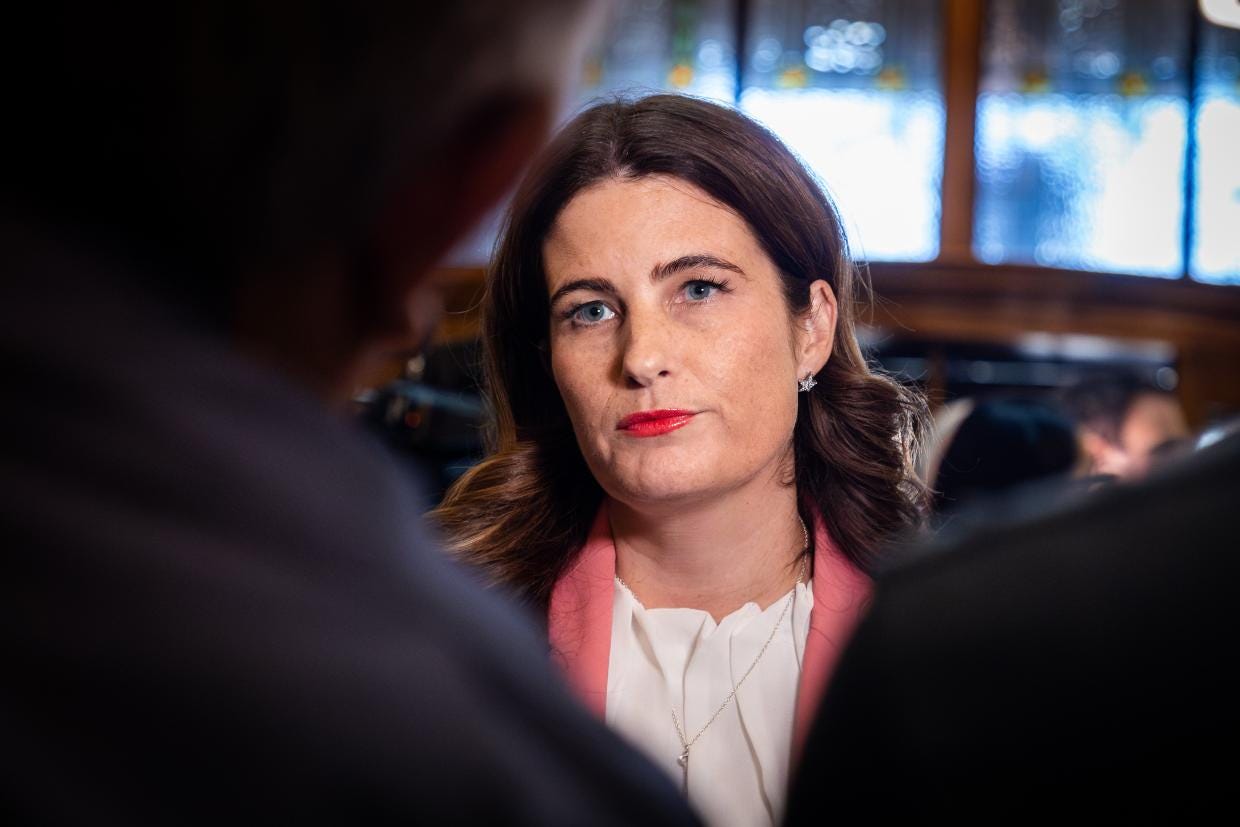
Nicola Willis has a first‑class honours degree in English literature and a postgraduate diploma in journalism. She understands rhetoric and how language works instinctively and through training. She will have studied French literary theorist Roland Barthes. She deploys what Barthes calls the “symbolic code”: the oppositions of virtue and vice, discipline and indulgence, to frame fiscal choices as moral ones.
She uses the “hermeneutic code”, a high‑theory label for a very old storytelling trick that draws the reader in, presenting rising debt, global instability, ageing populations and extreme weather as complex, urgent problems beyond the public’s full understanding. And then comes the hermeneutic punchline: her plan is the only credible resolution.
Lastly, she relies on the “cultural code”, drawing on familiar household metaphors that feel natural even as they distort how New Zealand’s public finances actually work. This is not accidental. It is craft. The Budget is written not just to inform but to shape the moral universe in which political decisions are judged.
Deconstructing that story as we have here is not cynicism. It is clarity. Willis’s speech is not simply a Budget. It is a clever fiction about how the world works, who deserves what and what the future should look like, with Nicola Willis cast as a virtuous Eve who did not eat the apple, and those who oppose or dispute her narrative as profligate devil’s advocates.
Excellent analysis, thank you! People who deride Willis’ English degree as useless to her finance portfolio miss this - she tells a very good story.
This must become common knowledge, it must enter the public domain. I cannot read it all at one sitting because it is so exciting. I want to shout it from the skies. Why can't people see. So many of my friends only grasp the household analogy. I am looking forward to The Reality of Everything on June 26. I would hope Chris Hipkins and Barbara Edmunds can read and understand this. And Qiulae Wong.